
What is a Theatre Ensemble?
Written by Catrin Jones
Catrin Jones is The Center's acting teacher and director of our Youth Theatre Ensemble. Originally from Wales, she studied BA (Hons) Acting at the Royal Welsh College of Music and Drama. In this series she explores what ensemble theatre is and why it matters for young performers, and gives an insight into what the Youth Theatre Ensemble at The Center will look like.
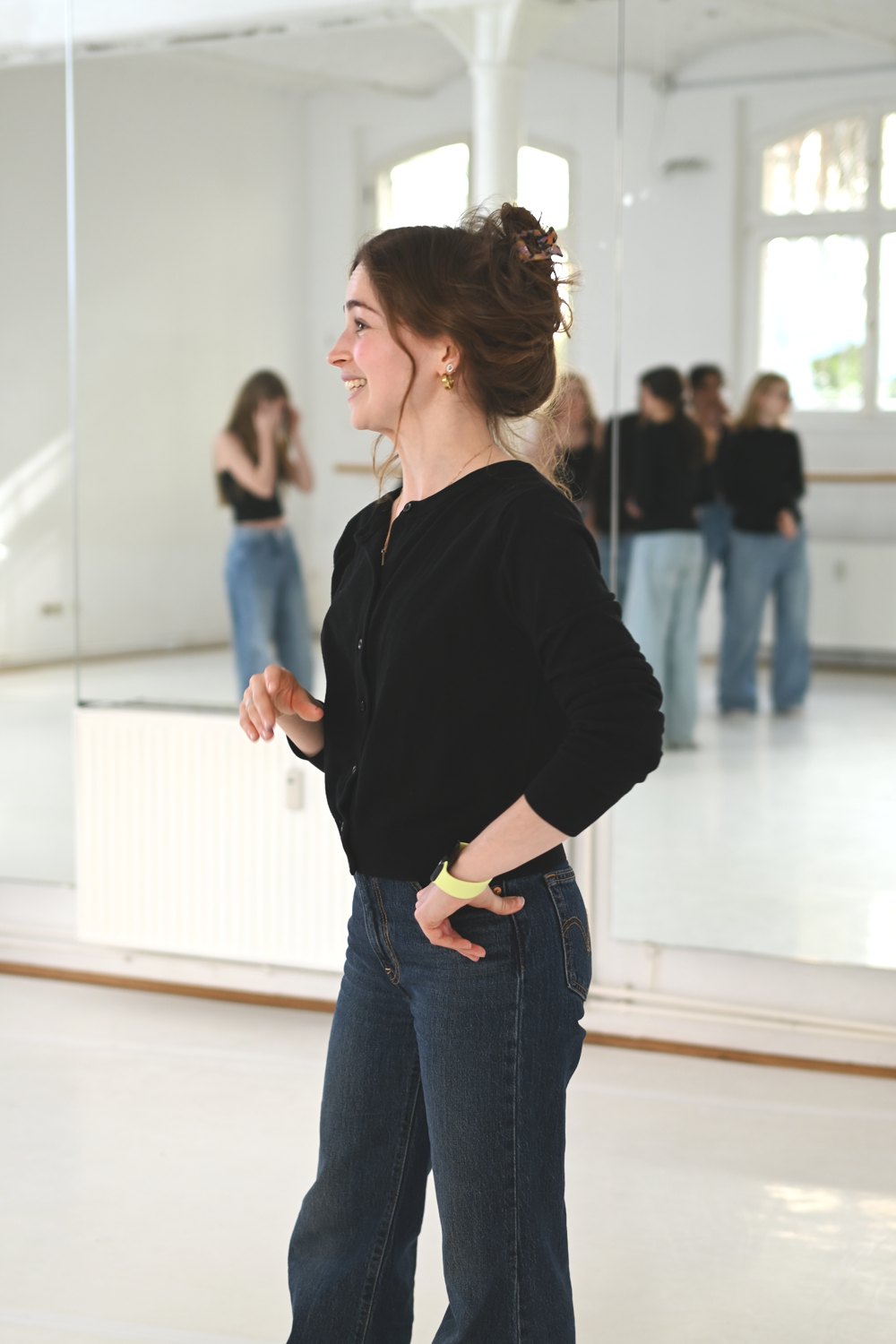
A theatrical ensemble is a group of performers and creators who collaborate closely to build a piece of theatre together. Rather than prioritising individual roles or star performers, ensemble work centres on connection and the collective storytelling of those on and off stage. While every participant will have their own role and contribution within the production, there are no leading roles in the traditional sense, as the focus is on the group working together as a whole. Ensemble work encourages every member of the group to contribute ideas and help to shape the artistic process.
Traditionally, ensembles are built over time through consistency, collaboration, and shared ownership of the work being created. The strength of a theatrical ensemble comes from the balance between individuality and collaboration. Every voice is heard, and together, the ensemble creates a unified piece of theatre.
This collaborative approach extends beyond performance into all aspects of production, including costume and set design. In ensemble theatre, design elements are often integrated into the creative process from the beginning. Due to the fact that there is no single central performer to design around, costumes frequently reflect the ensemble's identity as a collective. They may be deliberately neutral, or even visually unified to reinforce equality among performers.
Similarly, set design in ensemble theatre is often minimal and adaptable. Since ensemble work frequently relies on movement and physicality, the set is designed to support that kind of storytelling. Simple objects such as tables, chairs, or an open stage can be transformed into multiple locations and environments through the ensemble's performance.
Especially in devised ensemble theatre, designers may become part of the creative process, actively working alongside performers in the rehearsal room, instead of presenting a completed design for the show beforehand. This further strengthens the sense of collaboration, where all creative elements combine to produce a unified and unique theatrical experience.
It is important to note, however, that not all ensemble theatre is devised theatre. In devised ensemble work, the performers and creative team generate original material. However, many theatre ensembles perform non-devised work. This means they stage an existing script while still working with a strongly coherent, ensemble based approach. For example, Frantic Assembly is well known for ensemble performance styles, even when working from pre-written texts! That said, in both devised and non-devised ensemble theatre, the emphasis remains on connection and telling a story as a united collective.
The Center Youth Ensemble
The Center Youth Ensemble is a Saturday programme for English speaking youth and young people in Berlin who are interested in creating original theatre together in a supportive environment. Spanning several months and culminating in a public performance, the programme offers participants the opportunity to experience the full creative process of building a production from the ground up. As a paid programme, it is designed as a committed creative experience, rather than a more casual drop-in style class. This is not professional training in the traditional sense, and it is not simply an acting class. It is a small programme built around collaboration, devising, writing, movement, storytelling, design, and performance.
Over the course of the programme, the ensemble will work together to create an original stage production. Our ensemble members will help generate ideas, devise (and write) their own scenes, create characters, and even source or bring their own costumes and props if they wish – There will be a small budget for these. The goal is for the work to feel genuinely theirs!
As director, I will guide the process, but the ensemble itself will have the real creative ownership. The young people involved are not simply performing in a show, they are building it from the ground up. Every voice and each idea matters equally within our rehearsal room. I will then bring these ideas together and assemble the final script for our performance, all the while being sure to honour the story that the ensemble will have created.
Our programme is about creating a space where young people can belong creatively, work together, and experience the process of making brand-new and exciting theatre together.